
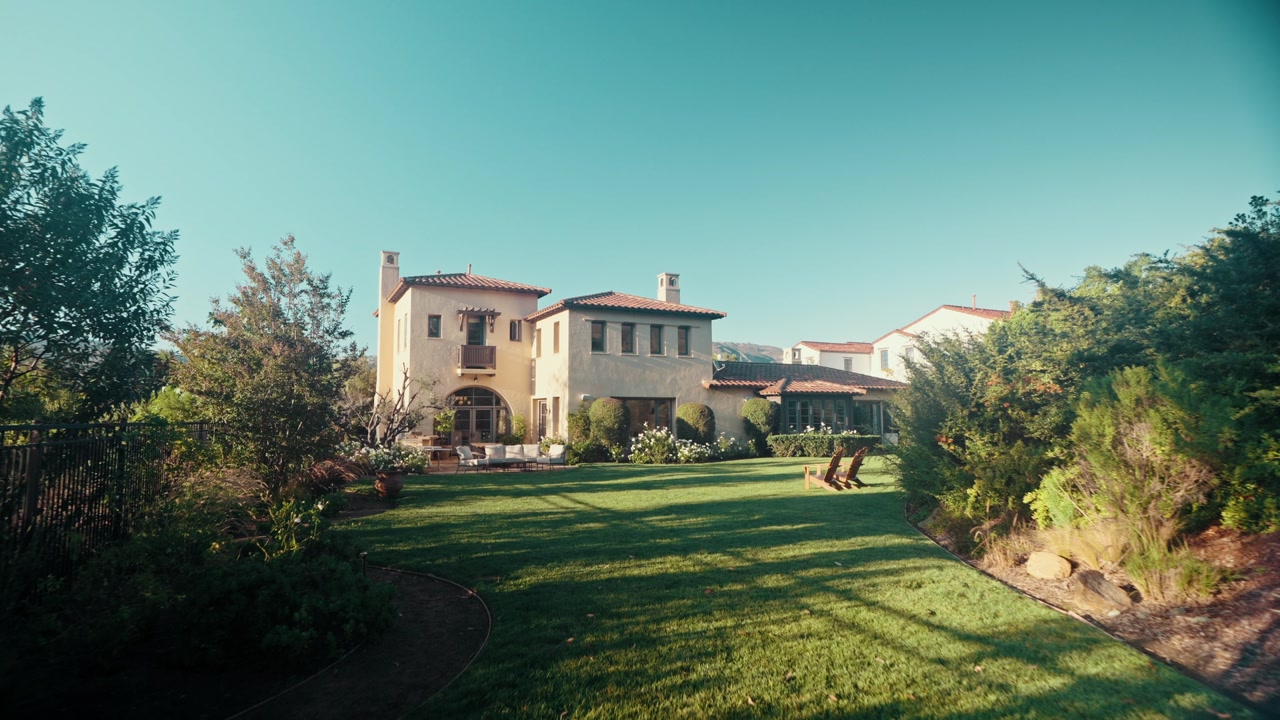
A walkthrough prioritizes orientation. A cinematic real estate video builds a point of view around the home—its architecture, atmosphere, setting, and the experience it offers. Understanding that distinction helps agents choose a format based on the listing rather than treating every video as the same deliverable.
What a standard walkthrough does well
A standard walkthrough follows a clear, practical route through a property. The camera may begin outside, enter through the front door, move through the main rooms, and finish in the yard or another key space. Its strength is straightforward coverage.
This format can work when the primary goal is to:
- Give remote viewers a basic sense of layout
- Document a home with a simple spatial flow
- Produce a functional overview without a larger narrative
- Complement photography with continuous movement
- Keep the production footprint relatively light
The viewer generally experiences the home in the order a visitor might physically move through it. That can make the video easy to understand, especially when room relationships matter more than mood.
The limitation is that complete coverage does not automatically create emphasis. If every room receives similar screen time and similar camera treatment, the most distinctive parts of the home can feel equal to the transitional ones. A walkthrough answers, “What is here?” It may not fully answer, “Why does this place feel different?”
What makes a real estate video cinematic
A cinematic listing film is planned around selectivity. Instead of attempting to record every doorway and corner, the filmmaker decides which details carry the story and how those details should unfold.
That process often considers:
- The home’s strongest visual idea
- The relationship between the architecture and the site
- Natural light at different times of day
- Camera movement that supports the mood of each space
- Aerial perspective when location and scale matter
- Sound, music, and editing rhythm
- Whether people or lifestyle moments would make the experience clearer
The film may still reveal the layout, but orientation is not its only purpose. A quiet close-up of materials, a wide exterior held at the right moment, or a transition from indoor living to an outdoor gathering area can communicate more than a continuous pass through several rooms.
Cinematic does not need to mean slow, dark, or overly dramatic. It means the visual choices are intentional and connected. The pace should fit the property. A restrained mountain home near Park City may call for a different rhythm than a modern Salt Lake City residence designed around entertaining.
Story versus sequence
The clearest difference is structure.
A walkthrough is usually organized by physical sequence: exterior, entry, kitchen, bedrooms, yard. A cinematic film is organized by viewer experience. It can begin with a landscape, architectural detail, or lifestyle moment before revealing the full property. It can return to a space later if that creates a stronger progression.
This gives the editor room to create anticipation and contrast. A film might move from quiet morning interiors to open social spaces, then widen into aerial views that place the property within its Utah surroundings. The goal is not to obscure the floor plan. It is to give the home a memorable shape in the viewer’s mind.
Coverage is not the same as communication
Agents sometimes worry that a selective film will leave something out. That concern is understandable, but video does not have to carry every piece of listing information alone. Photography, floor plans, written descriptions, and showing notes can handle exhaustive detail.
Video is especially useful for qualities that still images cannot fully express:
- Movement from one space to another
- Changes in light
- Ceiling height and volume
- Indoor-outdoor connections
- Approach, arrival, and reveal
- The energy of a neighborhood or landscape
A strong media package lets each format do what it does best. The listing film creates attention and emotional context; the supporting assets provide depth and reference.
Production differences to expect
A cinematic approach typically requires more decisions before the camera rolls. The filmmaker and agent should identify the audience, signature spaces, timing, and intended distribution. The property also needs to be ready for longer, more deliberate compositions.
Useful pre-production questions include:
- What should a viewer remember after watching?
- Which spaces best support that impression?
- Does the exterior improve at a certain hour?
- Is the surrounding landscape part of the value proposition?
- Would an agent introduction or lifestyle scene add context?
- Where will the film appear—listing page, website, presentation, or social media?
A walkthrough can also benefit from this planning, but the cinematic format depends on it. Camera technique alone cannot replace a clear creative direction.
Which format is right for the listing?
Choose a standard walkthrough when clarity and efficient spatial coverage are the main priorities. It may be the right fit for a straightforward property, a remote-buyer reference, or a listing package in which video has a supporting role.
Choose a cinematic listing film when the property has a distinct identity that deserves interpretation. Architecture, views, exceptional light, crafted interiors, recreational access, and a strong indoor-outdoor relationship can all support a more expressive format. Luxury listings often benefit from this treatment because buyers are evaluating an experience as well as a set of features.
Some properties benefit from a hybrid: a cinematic opening and closing with a clear central tour. The important decision is not whether one style is universally better. It is whether the structure supports the property and the way the agent intends to market it.
Takeaway: decide what the video must accomplish
Before choosing a format, define the video’s primary job. If viewers mainly need to understand the route through the home, a polished walkthrough may be enough. If they need to feel the setting, design, pace, and lifestyle before they visit, a cinematic approach gives those qualities room to lead.
Zeau Media creates cinematic listing films, twilight coverage, aerial media, lifestyle stories, and agent-brand content from Salt Lake City for projects across Utah and nationwide. Explore the approach or plan a property film on the Utah real estate videographer service page.