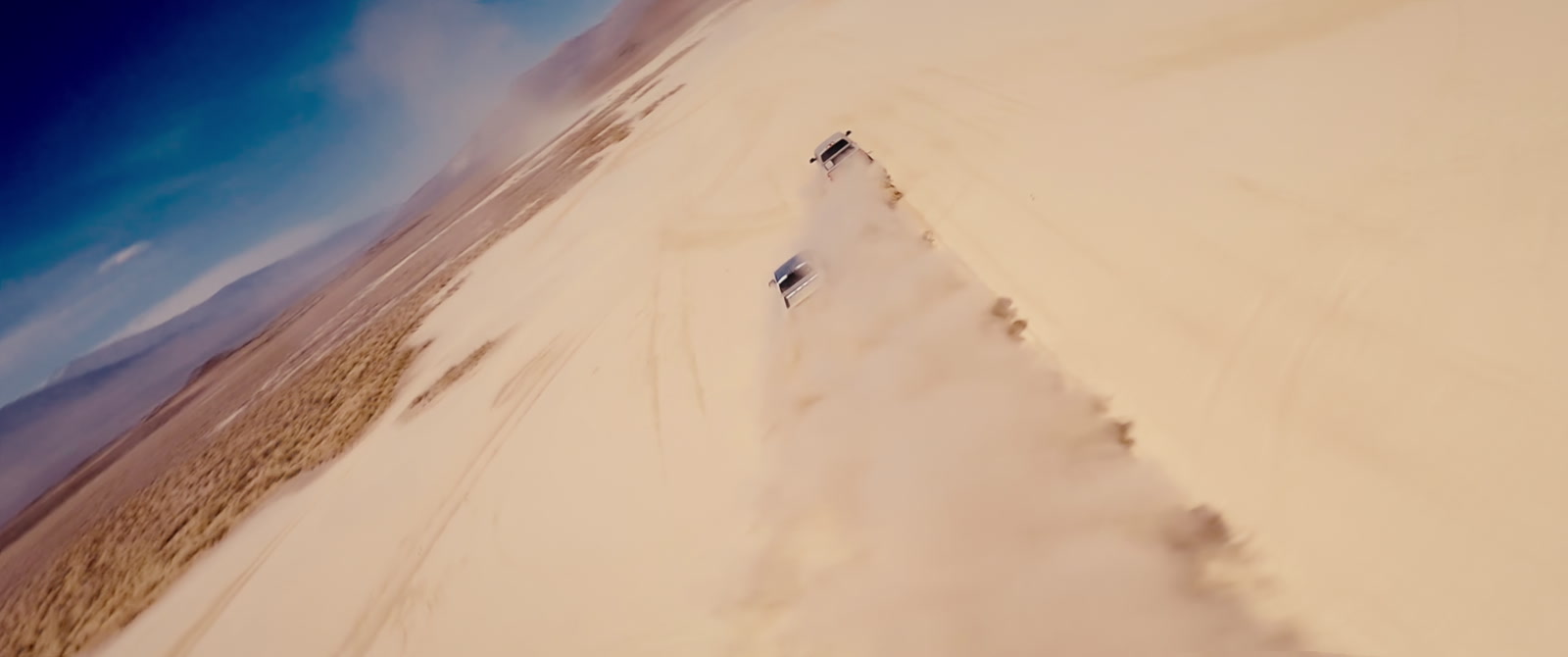
But FPV is not the right tool for every listing. A technically difficult flight is not automatically a useful film. The format works best when movement reveals something important about the property—and when the flight can be planned safely and clearly.
What FPV changes about a property tour
Conventional real estate cinematography is built from separate, controlled shots. A filmmaker can choose a precise angle for the kitchen, reset for a hallway, capture an aerial, and shape the sequence in editing.
FPV often treats the property as a connected route. The aircraft may approach the home, enter through an opening, cross a main living space, reveal an outdoor area, and continue toward a final destination. That uninterrupted movement helps the viewer understand relationships between spaces.
Its strengths include:
- Continuous transitions between exterior and interior
- A strong sense of speed, direction, and discovery
- Movement through large or unusual spaces
- A memorable opening or closing shot
- A natural way to connect architecture with an activity or setting
The experience can feel closer to moving through the property than looking at a collection of rooms. That connection—not novelty—is the format’s value.
Properties that tend to suit FPV
FPV works best when there is a readable path and enough visual change along the route. The property should give the aircraft somewhere meaningful to go.
Strong candidates may include:
- Homes with open plans and broad transitions
- Large entries, galleries, staircases, or double-height spaces
- Properties with a clear indoor-outdoor connection
- Estates with detached structures or multiple activity zones
- Hospitality, resort, or recreation-oriented spaces
- Homes where the approach and surrounding landscape matter
A Utah property might allow a route that begins with mountain context, approaches the architecture, moves through an open central space, and exits toward a terrace. Another might connect a garage, entertaining area, and exterior feature. In both cases, the flight communicates how the property’s parts relate.
The best routes have a beginning, progression, and destination. A flight without a visual idea can be technically smooth but narratively flat.
When FPV is less effective
Some spaces resist continuous flight. Narrow furnished rooms, low ceilings, reflective surfaces, moving curtains, delicate fixtures, and heavily segmented layouts can limit both safety and visual clarity.
FPV may not be the best primary format when:
- The home is defined by fine material details rather than spatial flow
- Most rooms are small or connected by tight turns
- The route would require distracting speed changes
- Occupants, pets, or uncontrolled visitors cannot be cleared
- Openings and exits are too constrained for a sensible path
- The most valuable views need slow, stable composition
- The flight would show more transitional space than signature space
A conventional camera is often better for subtle texture, carefully balanced interiors, or a calm architectural mood. It can hold a composition, control perspective, and reveal details without the route dictating the pace.
The right question is not, “Can a drone fit through here?” It is, “Will this movement make the property easier to understand or more compelling to experience?”
FPV does not have to carry the whole film
An FPV sequence can be highly effective as one part of a cinematic listing film. It might open with an energetic arrival, link two important zones, or close by exiting the home into the landscape. Conventional camera and aerial footage can then provide the controlled detail and visual rest that a continuous flight does not.
This hybrid structure gives each tool a defined purpose:
- FPV for connection and momentum
- Stabilized camera movement for interiors and details
- Traditional aerial footage for scale and geographic context
- Editing for rhythm, emphasis, and a clear story
The property, rather than the technique, remains the subject.
Planning the route
A good FPV tour is designed before takeoff. The pilot and production team should walk the route, identify hazards, choose entrances and exits, and decide where the viewer’s attention should go.
Useful planning questions include:
- What is the single most important relationship the flight should reveal?
- Where should the viewer first see the home?
- Which transition will feel surprising but still readable?
- Are doors, windows, and outdoor paths wide and clear enough?
- What lighting changes occur between the exterior and interior?
- Where can the flight end with a strong composition?
- Can the route be controlled throughout production?
The property should be staged for movement. Furniture, cords, decor, open doors, and glass can affect the path. Everyone on set should understand where the drone will travel and keep the route clear.
Safety and permission come before the shot. Indoor and outdoor operations present different conditions, and aerial work must be evaluated for the specific property, location, weather, and surrounding airspace. A responsible production will adjust or decline a route that cannot be controlled appropriately.
How to keep the flight cinematic
Fluidity alone does not create a strong sequence. The speed should let viewers read the architecture. Turns should reveal rather than disorient. Changes in height should have a visual reason, such as rising through an open stair volume or descending toward an outdoor destination.
Lighting is equally important. A route that moves from bright exterior sun into a darker interior can create a dramatic transition, but the exposure change must be anticipated. The team may alter the route, timing, or interior lighting to maintain a usable image.
Strong FPV work knows when to slow down. A measured glide can feel more premium than constant acceleration. Movement should match the home’s character and audience.
FAQ
Is an FPV tour the same as standard drone video?
No. Standard aerial video typically captures wider exterior views from a stable perspective. FPV uses a more agile, first-person style and can connect spaces through a continuous route.
Can FPV fly indoors and outdoors in one shot?
It can when the property, route, lighting, permissions, and operating conditions support the transition. The route should be assessed and prepared in advance.
Should FPV replace conventional listing footage?
Not necessarily. It is often most effective alongside stabilized interiors, details, and traditional aerial footage. The mix should be based on what the property needs to communicate.
Use FPV when movement has a purpose
An FPV real estate tour works when the path itself tells the story. If it reveals scale, connection, activity, or a distinctive arrival, it can become a defining part of the listing film. If the route adds complexity without insight, conventional coverage will usually serve the home better.
Zeau Media creates immersive FPV, aerial video, and cinematic property films from Salt Lake City for Utah and nationwide projects. Explore options and discuss the right production mix on the Utah real estate videographer service page.